Signs you need a new roof
Altitude, hail and freeze-thaw age a roof here faster than the label on the bundle suggests. These are the signs we look for.
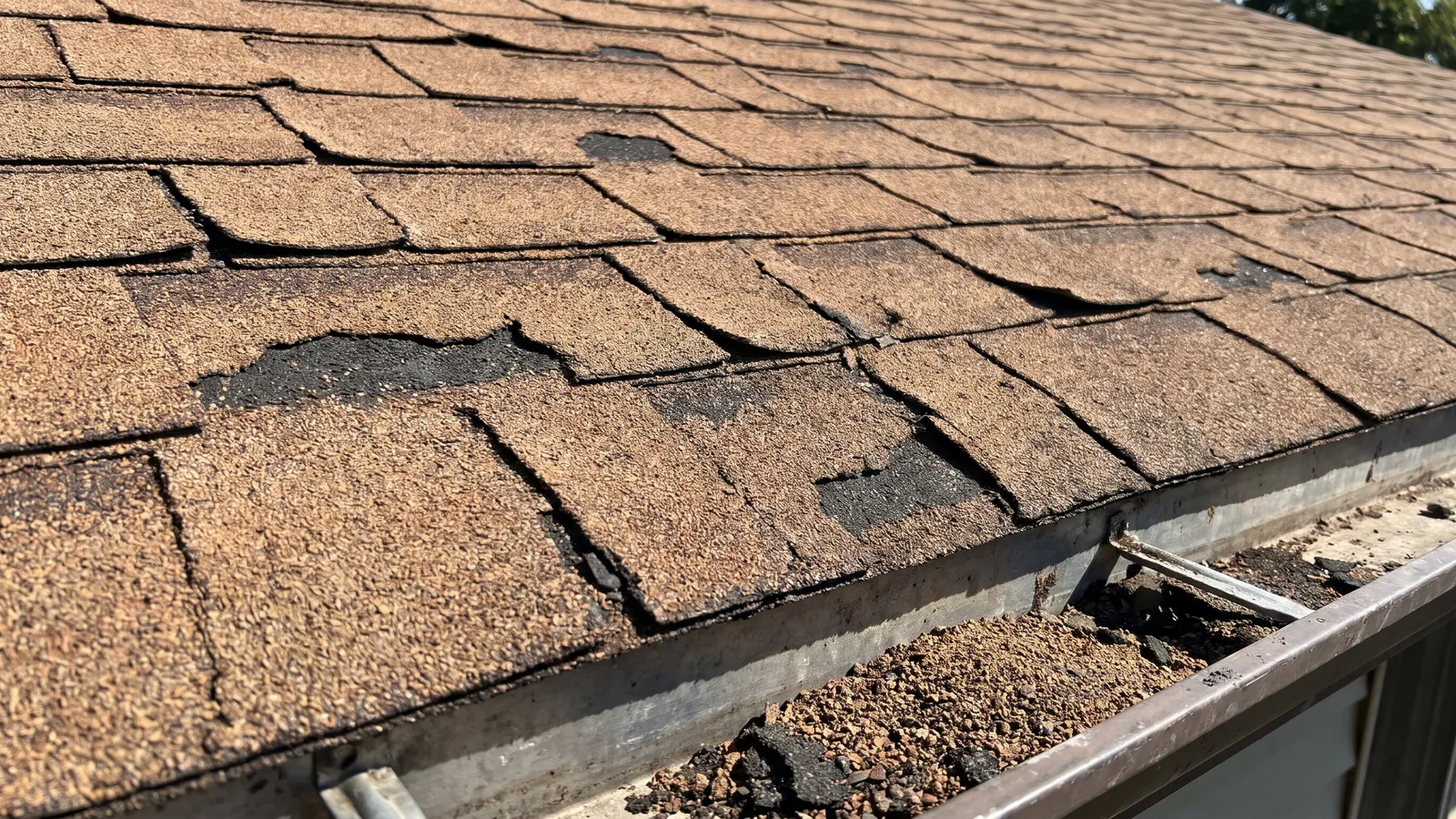
From the ground
- Granules at the downspouts. A handful after a storm is normal; a steady pile means the shingles are wearing through.
- Curling or cupping. Shingle edges lifting up or edges curling down show the asphalt has dried out.
- Bald or dark patches. Spots where the protective granules are gone.
- A wavy roofline. Sagging between rafters can mean wet or failing decking.
- Dents in vents and gutters. Evidence of hail large enough to bruise shingles.
From inside
- Stains on ceilings or around the tops of walls, especially after snowmelt
- Daylight through the roof boards in the attic
- Damp or compressed insulation
- Frost on the underside of the decking in winter, a ventilation warning
Why roofs age faster here
Ultraviolet exposure rises with altitude, and at over 6,000 feet the sun dries out asphalt quicker. Hail knocks granules off and leaves bruises that weather into cracks. Freeze-thaw opens small gaps every winter. A roof that would last a long time in a mild climate can be worn out years sooner on the Front Range.
Repair or replace?
One or two of these signs in one area usually means a repair. Several of them across the roof, or a roof that has had hail damage on most slopes, points toward replacement. A free inspection gives you photos and a straight answer.
Quick answers
How old is too old for a roof?
Age alone does not decide it. Condition does. We have seen young roofs ruined by hail and older ones in decent shape.
Can I just put new shingles over the old ones?
Code allows limited overlays in some cases, but we recommend a tear-off so the decking can be checked.